

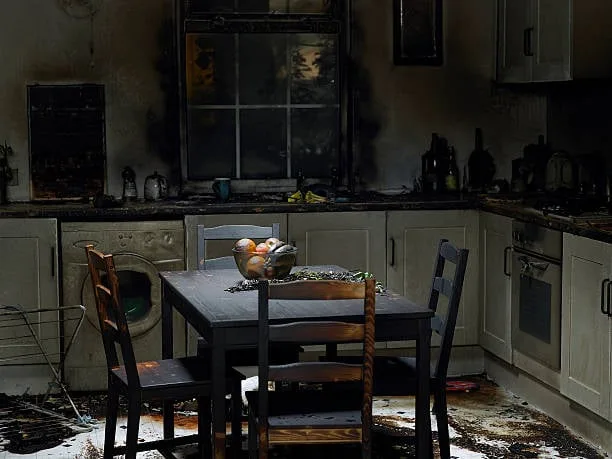
Probably one of the scariest experiences anyone could face is dealing with a home cooking fire. Most people cook every day, but it could only take a second for something to catch on fire. A 2020 research report from the National Fire Protection Association averages that nearly 49 percent of all reported home fires are caused by cooking.
True Builders has provided kitchen fire repair services to dozens of homes in the Plant City, Lakeland, and Winter Haven areas, so we understand first-hand how devastating a house fire can be and the type of structural damage it can create.
Seeing as the holiday season is the peak time of year for most home cooking fires, it’s important to be aware of the five most common reasons causes of a kitchen fire. Knowing these safety risks isn’t just a way to help avoid costly home repairs; it could save your life.
1) Leaving your cooking unattended
Unattended cooking is by FAR the leading factor of most kitchen fires. In fact, it was the cause of nearly 31 percent of all home fires and 53 percent of cooking fire-related deaths between 2014-2018.
Walking away while you’re cooking, even for a second, can quickly become a dangerous situation. It’s never a good idea to multi-task and be moving around your house if there is an open flame or your stove is set to a high temperature. You should always be focused on your cooking.
Also, if you feel you’re too tired or not feeling well, it’s better to leave the stove alone and order takeout. Nearly 23 percent of kitchen fires happened because the person was asleep, and sleeping accounted for almost 40 percent of civilian casualties from 2014-2018.
2) Frying with oil
Anytime you fry or broil anything using oil, it needs continuous attention. Two-thirds (66 percent) of kitchen fires occurred after cooking oil, fat, grease, butter, and other cooking substances were ignited. Oil can make the fire spread faster and can still cause a fire the next time someone cooks if there’s any residue left on the stovetops.
When you’re cooking and frying oil:
- Cover the bottom of your pan with just enough oil so your food isn’t submerged.
- Add your food gently into the pan so the oil doesn’t splatter.
- Clean the entire cooking area and countertops so no oil or grease splatter is left on any surface.
- In the event your pan does catch on fire, DO NOT use water to extinguish the flames. This will only cause the fire to spread. If you can, put on oven mitts and safely slide a non-glass lid onto the pan to smother the flames and then turn off your stove.
3) Setting the cooking temperature too high
You don’t need to turn your stove or oven top all the way up to properly cook your food. While you may be hungry and just want to get the cooking out of the way, setting your appliances to ridiculously high temperatures is extremely dangerous.
As mentioned before, food combustion is responsible for most kitchen fires, and when combined with oil, it creates a recipe for disaster. Preheat your stove or oven to the recommended cooking temperature and don’t leave it unattended. If you have a gas stove, never let the flame rise over the top of the pot or pan. Be patient and follow exactly what the recipe calls for.
4) Wearing loose-fitting clothing around your stove
Clothing ignitions are responsible for a large number of fire-related deaths even though they make up less than one percent of all home cooking fires annually. Loose and billowy clothes can catch on fire if they come in contact with a burner or if the fabric gets caught on the stove.
How quickly your clothes will catch on fire depends on the type of fabric. Cotton and linen burns quickly and can be lit in a matter of seconds. Polyester, nylon, and spandex won’t burn as fast, but what makes synthetic materials so dangerous is that they’ll melt directly onto your skin. The best thing to wear when cooking is a fire-retardant apron and form-fitting clothes.
5) Flammable compounds left near an open flame or other heating elements
Your kitchen is full of flammable objects. Napkins, paper towels, rags, food packages, cookbooks, recipe cards, and wooden utensils should never be left near or around your stove or oven top. It’s important any highly flammable or combustible items are kept away from your cooking surfaces.
Types of Kitchen Fires: Grease, Electrical, and Appliance
Kitchen fires fall into three groups, and each one has to be put out differently.
Grease fires start in the pan. Cooking oil heats past its smoke point, keeps climbing to its flash point, and ignites. These are Class K fires. Water makes them worse, and so does moving the pan.
Electrical fires start in a cord, an outlet, or the wiring behind an appliance. Signs show up before the flame does: a warm outlet, a breaker that trips whenever the microwave runs, a scorch mark on a plug. Never throw water on one. Cut power at the breaker if you can reach it safely.
Appliance fires are their own category. Oven fires are usually food debris on the oven floor or a spill on the heating element, which is why a self-cleaning cycle sometimes sets one off. If a fire starts inside the oven, leave the door shut and turn the oven off. The sealed box smothers it. Opening the door feeds it oxygen.
How to Put Out a Grease Fire Without Spreading It
Turn off the heat and cover the pan with a metal lid. That is the whole method, and the order matters.
- Turn off the burner. Do not reach across the flames to do it. If the knob is behind the fire, skip to step 4.
- Slide a metal lid over the pan. Slide it, do not drop it, so you do not splash burning oil. A cookie sheet works. A glass lid can shatter from the heat.
- Leave it covered and let the pan cool. Twenty minutes at least. Lifting the lid early lets oxygen back in and the oil can reignite.
- Get out and call 911 if the flames are not out in a few seconds, or if they have reached the cabinets, the range hood, or the wall.
What not to do, in order of how much damage it causes:
- Do not use water. Water hits oil at roughly 700 degrees, flashes to steam instantly, and blows burning grease across the room. This is how a pan fire becomes a house fire.
- Do not move the pan. Carrying a flaming pan to the sink or the back door spills fire along the way, usually onto you.
- Do not fan it or throw a towel on it. Both spread flame.
- Do not use flour or sugar. Both are combustible. Baking soda works on a small stovetop flare-up, but you need far more of it than most people have on hand.
What Type of Fire Extinguisher Do You Need in a Kitchen?
You need a Class K extinguisher for cooking oil, or a multipurpose ABC extinguisher as a minimum.
Class K extinguishers use a wet chemical agent that reacts with hot grease and turns the surface into a soapy layer that seals out oxygen. That is the only chemistry built for cooking oil, and it is what commercial kitchens are required to carry. A residential Class K unit is small and mounts on the wall.
An ABC extinguisher is the common red household model. It covers ordinary combustibles, flammable liquids, and energized electrical equipment, so it handles the electrical and paper-and-packaging fires a kitchen also produces. It will knock down a grease fire, but the dry powder can scatter the burning oil if you spray straight into the pan.
A few rules that decide whether the extinguisher does any good:
- Mount it near the kitchen exit, not next to the stove. You want to be able to grab it while backing away from a fire, not reaching over it.
- Check the gauge twice a year. A needle outside the green band means it will not discharge.
- Aim at the base of the flames, not the flames themselves, and sweep side to side.
- Stand about six feet back. Closer than that and the pressure spreads a grease fire.
If the fire is already bigger than the pan, put the extinguisher down and leave. Extinguishers are for the first ten seconds of a fire.
Should You Keep a Fire Blanket in Your Kitchen?
Yes, and it is the easiest thing on this list to use correctly.
A fire blanket is a fiberglass or fire-retardant sheet in a pouch. You pull the tabs, hold it in front of you with your hands shielded behind it, and lay it flat over the pan. It smothers the fire the same way a lid does, but it covers a larger area and works on a pan too wide for any lid you own.
It also works on something an extinguisher does not: a person whose clothing has caught fire. Wrap them and smother it.
Two things to get right. Lay the blanket down over the fire rather than throwing it, so you do not push flames sideways. And leave it in place until everything underneath is cold. Most household blankets are single use, so replace one after it has been used.
Hang it near the kitchen door, in reach without walking toward the stove.
Kitchen Fire Statistics: How Often Cooking Causes Home Fires
Cooking causes nearly half of all reported home fires. The National Fire Protection Association’s 2020 report puts it at 49 percent, which is more than heating, electrical, and smoking combined.
The rest of the numbers explain where in the cooking that goes wrong:
- Unattended cooking caused about 31 percent of all home fires and 53 percent of cooking fire deaths from 2014 to 2018.
- Two-thirds of kitchen fires ignited cooking oil, fat, grease, butter, or a similar substance.
- Nearly 23 percent of kitchen fires happened while the cook was asleep, and being asleep accounted for almost 40 percent of civilian casualties over that same period.
- Clothing ignitions are under one percent of home cooking fires but cause a share of fire deaths far out of proportion to that number.
Two patterns run through all of it: the cook left, and there was hot oil in the pan.
What should you do after you experience a kitchen fire?
Above all else, call 911 immediately if you cannot control the kitchen fire. A kitchen or home is replaceable, your life isn’t.
If the cooking fire was small and has been properly handled, you should give our team at True Builders a call. There are a number of items that will need replacing after a kitchen fire, including your flooring and appliances. We replace fire-damaged cabinets, install new countertops, and where the layout no longer works around the damage we can turn the repair into a full kitchen remodel. Smoke can also damage your walls and the material underneath, so these things may need replacing as well. Once we’ve assessed the damage, we can go to work on the repair and cleanup process.
What Happens After the Fire Is Out: Smoke, Soot, and Rebuilding
The fire stops, and the damage keeps going. Soot is acidic. Left on a surface it etches appliance finishes, discolors grout, and corrodes the metal inside outlets and appliance housings within days. Smoke odor moves through the HVAC system and settles in drywall, insulation, and cabinet interiors well beyond the room that burned.
That is why kitchen fire repair starts with cleaning and containment, not construction. Our fire damage restoration crews stabilize the structure, and smoke damage remediation handles the soot and odor in the rooms the fire never reached. When the structure itself is gone, we rebuild after a total loss fire and take the property from demolition through the finished kitchen.
One more thing to expect: firefighting water. Hoses and sprinklers put a lot of water into a house in a short time, and it runs under cabinets and into the subfloor. Extraction and drying are not our scope. If you need water mitigation, our sister company handles it - visit True Plumbers at trueplumbers.com. We coordinate directly with their crews so the drying finishes before we start rebuilding.
Kitchen Fire Repair in Plant City and Lakeland
True Builders has repaired fire-damaged kitchens across Central Florida since 2009, and we hold Florida general contractor license CRC1335717. We work in Plant City, Lakeland, Winter Haven, and the surrounding communities, and our disaster restoration team is reachable at any hour.
You can see our fire restoration projects to get a sense of the scope of work, and if the repair falls outside your deductible we offer financing for repairs through two lending partners.
The rebuild itself is covered in kitchen fire repair in Lakeland. Call (863) 647-1800 when the fire department clears the house. The sooner soot comes off the surfaces, the less of your kitchen has to be replaced.